Support Staff Query Chains: Verifying Payments and Activating Bonuses in Multiple Game Formats
Written by Greta Beck · Jun 20, 2026

Support Staff Query Chains: Verifying Payments and Activating Bonuses in Multiple Game Formats
Query chains form the backbone of how support teams connect payment checks to bonus releases across slots, table games, live dealer sessions, and sports wagering platforms, and observers note that these processes rely on sequential verification steps that prevent mismatches between deposits and reward triggers. Staff members start by logging incoming payment queries through centralized ticketing systems, cross-reference transaction records from banking partners, and confirm player identity details before any bonus activation occurs.
Data from the Australian Institute of Family Studies shows that structured query handling reduces errors in bonus distribution by linking each payment step directly to game-specific rules, while support personnel maintain audit trails that cover everything from initial deposit confirmation to final reward credit. This approach applies equally to reel-based games where fixed percentage bonuses activate on verified deposits, and to sportsbooks where event-specific promotions require separate compliance checks.
Breaking Down the Verification Sequence
Teams follow a clear chain when a payment query arrives: first they validate the transaction amount against player accounts, then they review any attached bonus codes or promotional terms, and finally they route the information to the correct game engine for trigger execution. In slots environments, this often means confirming that a deposit meets wagering requirements before unlocking free spins or match bonuses, whereas live dealer formats demand additional checks on table minimums and session timing to align rewards properly.
Those who've studied operational workflows point out that multi-format platforms create extra layers because a single payment might unlock bonuses across both casino sections and betting markets, requiring staff to segment the query chain into parallel tracks that feed distinct backend systems. June 2026 updates to several international gaming platforms introduced automated flags within these chains, allowing human reviewers to focus on edge cases like currency conversions or delayed bank settlements rather than routine approvals.
Handling Varied Game Formats
Slots operations typically feature straightforward trigger logic tied to deposit size and game category, so support staff verify the payment source, match it to the correct promotional pool, and release credits that appear instantly on the player's reel interface. Table games add complexity because bonuses often depend on specific bet types or session volumes, forcing teams to pull additional data from dealer logs before completing the chain.
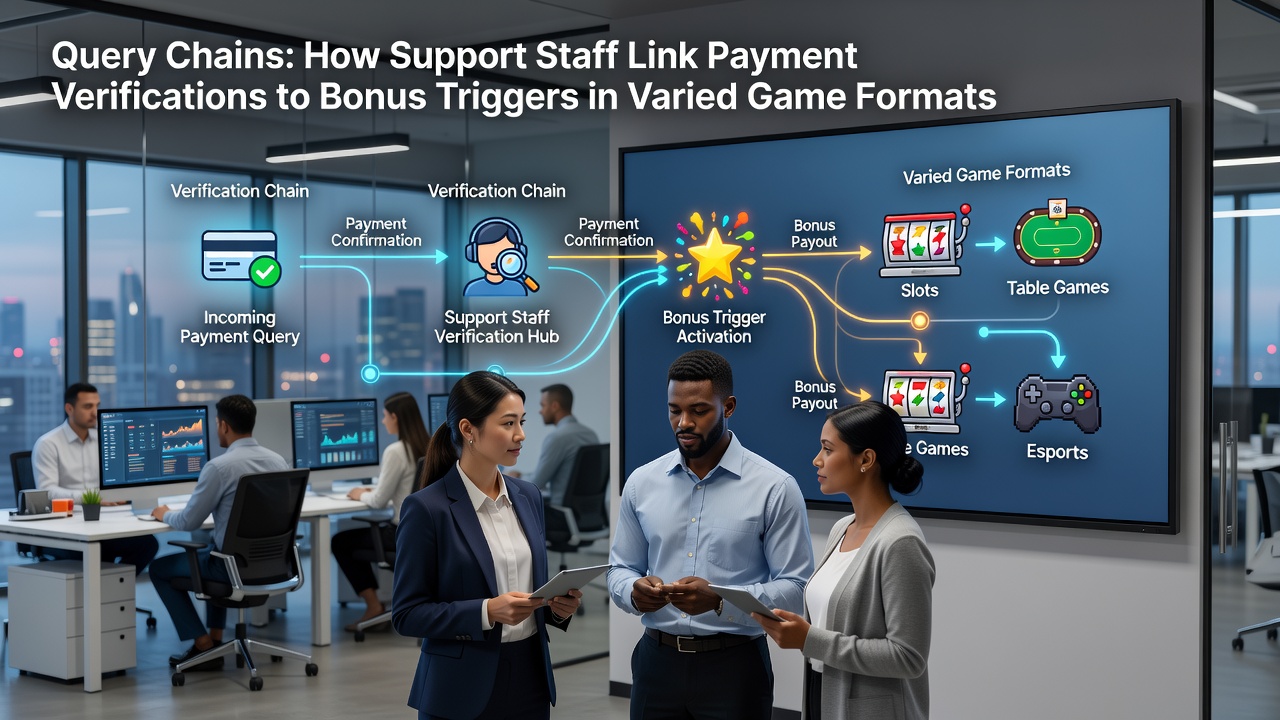
Live dealer environments require real-time coordination between payment verification and ongoing table activity, with staff confirming that bonus funds apply only after identity checks clear and before the next hand or spin begins. Sports betting formats introduce event-based conditions, where a verified deposit might unlock a risk-free bet only if it matches the timing of a scheduled match or league promotion, and query chains here often extend across multiple departments to capture both financial and event data.
Reports issued by the UNLV International Gaming Institute indicate that operators running hybrid game libraries maintain separate verification modules for each format, yet central support teams stitch these modules together through shared query logs that track every handoff from payment processor to bonus engine. This integration helps ensure consistency when players move between game types within a single account session.
Common Challenges and Chain Adjustments
Payment delays from certain banking methods can stall an entire query chain, prompting staff to insert manual review points that pause bonus activation until funds settle. Currency fluctuations add another variable, especially on platforms serving multiple regions, where teams must recalculate bonus values before the trigger fires. Observers note that high-volume periods increase the frequency of partial verifications, where staff approve base deposits quickly but hold promotional elements for secondary checks.
Those managing these systems often segment complex queries into sub-chains that run simultaneously: one track confirms the payment, another validates the bonus eligibility rules, and a third monitors game-format restrictions. This parallel structure keeps response times low even when players engage across slots, tables, and sports markets in quick succession.
Conclusion
Query chains provide the documented pathway that lets support staff translate verified payments into format-specific bonuses without disrupting player experiences, and the process continues to evolve alongside platform updates scheduled through 2026. Clear sequencing, cross-format coordination, and audit-ready logs remain central to maintaining accuracy across the full range of game types.