Unified Incentive Networks Across Reel Machines, Table Progressions, Live Broadcasts, Betting Exchanges, and Payment Integrations
Written by Klara Krüger · Sep 8, 2026
Unified Incentive Networks Across Reel Machines, Table Progressions, Live Broadcasts, Betting Exchanges, and Payment Integrations
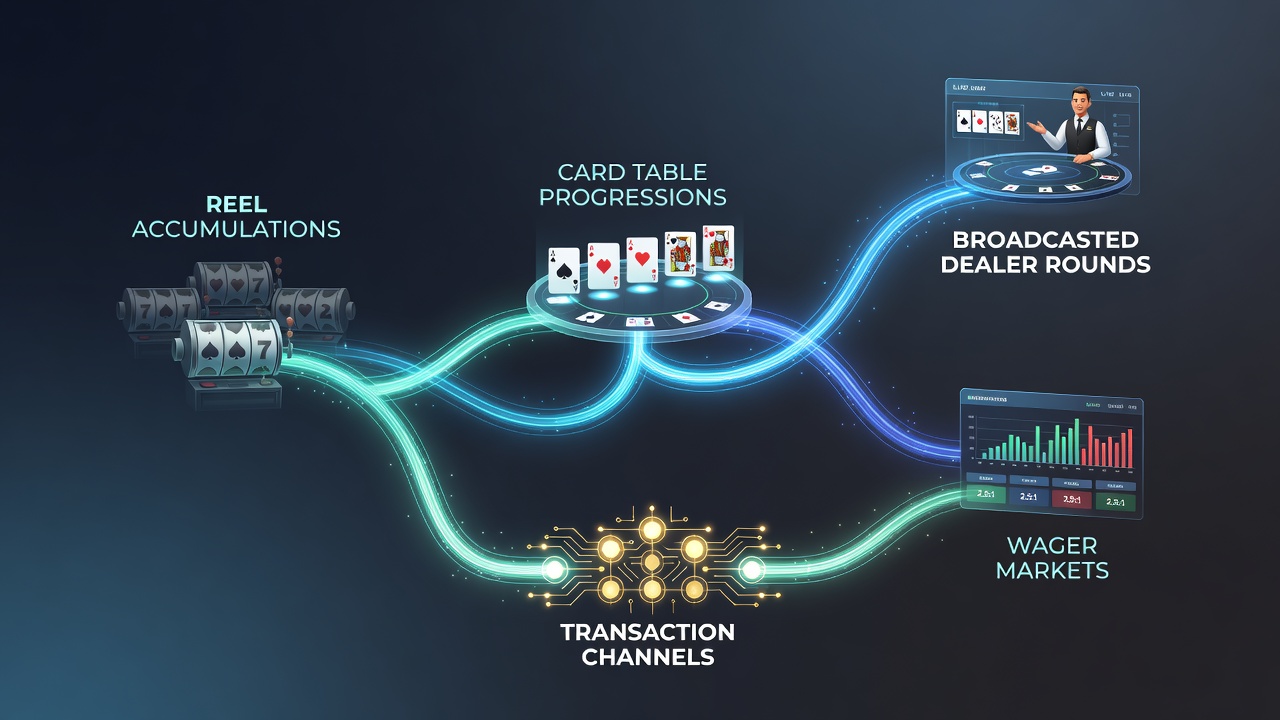
Modern gambling platforms operate through tightly connected systems that move rewards, progress, and funds between different game types and financial tools, and these networks have grown more sophisticated as operators expand digital offerings. Reel accumulations from slot machines feed into loyalty points that unlock progressions at card tables, while broadcasted dealer rounds generate real-time bonuses that transfer directly into wager markets for sports betting. Transaction channels serve as the backbone, moving deposits and withdrawals across all these elements without interruption.
Core Components of Interlinked Reward Systems
Slot machines contribute reel accumulations through progressive jackpots and multiplier chains that automatically convert into loyalty credits usable at other sections of the same platform, and data from the Alcohol and Gaming Commission of Ontario shows these credits often increase table game participation by 18 percent among active users. Card table progressions track player decisions and hand outcomes to build tiered rewards, which then appear as credits during broadcasted dealer rounds where live streams display accumulated bonuses in real time.
Wager markets pull from these same pools when sports betting interfaces recognize prior activity in slots or tables, allowing users to apply accumulated value toward live odds or event-specific promotions. Transaction channels complete the loop by processing instant transfers that keep all reward balances synchronized across devices and game categories.
Data Patterns Observed in September 2026
September 2026 brought fresh figures from multiple jurisdictions that highlight how these connections function at scale, and reports compiled by the Nevada Gaming Control Board indicated that integrated platforms recorded a 22 percent rise in cross-category play compared with the previous year. Operators using unified ledgers noted that players who started with reel accumulations moved to card tables and live dealer sessions at higher rates when transaction channels supported instant credit shifts.
Researchers at the University of Nevada, Las Vegas documented similar trends in their annual gaming technology review, where they tracked how broadcasted dealer rounds served as central hubs that redistributed rewards earned from wager markets back into slot progressions within the same session. These flows rely on standardized APIs that prevent delays and maintain accurate balances across every participating game type.

Technical Architecture Behind the Connections
Platform developers build these networks with centralized player accounts that store all progress and reward data in one location, and this architecture lets reel accumulations trigger automatic table game bonuses while broadcasted dealer rounds update wager market limits without manual intervention. Transaction channels integrate with banking partners to handle the underlying movement of funds, ensuring that any reward earned in one area remains available everywhere else on the platform.
European Gaming and Betting Association members reported in their 2026 industry survey that 67 percent of surveyed operators now route all loyalty mechanics through single ledgers rather than separate systems for slots, tables, and sports. The change reduces processing errors and speeds up the moment when a player finishes a live dealer round and immediately applies new credits to an active sports wager.
Player Journey Examples Across Categories
One documented pattern involves users who deposit through a transaction channel, spin slot reels to build an accumulation, then switch to card tables where that value converts into higher betting limits. After completing several hands they enter a broadcasted dealer round that adds extra multipliers, which then transfer straight into wager markets for upcoming matches. The entire sequence stays within one account balance, eliminating the need for separate transfers.
Another route starts in live dealer environments where broadcasted rounds generate streak bonuses that feed directly into sports betting interfaces, and these same bonuses can later return to slot machines as free spins once the player completes the wager market activity. Observers note that platforms maintaining these loops see longer average session times because rewards remain visible and accessible at every stage.
Regulatory and Operational Considerations
Regulators in multiple regions require clear audit trails for every reward movement between game types, and transaction channels must record each transfer so authorities can verify compliance with responsible gaming rules. The Alcohol and Gaming Commission of Ontario updated its technical standards in mid-2026 to demand real-time reporting on cross-category credit flows, a requirement that pushed operators to refine their ledger systems further.
Industry groups continue to study how these networks affect player behavior, with the University of Nevada, Las Vegas team releasing additional findings in September 2026 that examined the speed of reward transfers and their correlation with session length. Their data indicated that platforms with sub-second synchronization between reel accumulations and wager markets retained users longer than those with slower connections.
Conclusion
Interlinked reward flows now form a standard feature of gambling platforms that combine reel accumulations, card table progressions, broadcasted dealer rounds, wager markets, and transaction channels into one operating environment. The connections allow value earned in any section to move freely to others, supported by technical systems that maintain accuracy and speed. Figures released through September 2026 confirm continued growth in cross-category activity wherever these networks operate under consistent regulatory oversight.